
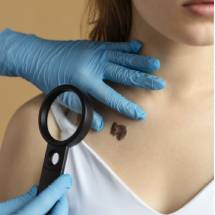
What is a Skin Tags
Skin tags, also known as acrochordons, are benign growths that can appear anywhere on the skin but are commonly found on the neck, eyelids, or underarms. They can be the same color as your skin, darker, pink, or even red when irritated. Skin tags may dangle from a stalk or be firmly attached to the skin. Despite their harmless nature, many people seek their removal.
When should you remove a skin tag?
Removal is typically only necessary if a skin tag becomes irritated, uncomfortable, or affects your eyesight. If this applies to you, it’s best to consult a board-certified dermatologist who can expertly handle skin issues.
Why do skin tags form?
Skin tags often develop in areas where skin rubs against skin, jewelry, or clothing. Common sites include beneath the breasts, on the eyelids, in the groin, neck creases, and underarms. Overweight individuals, pregnant women, or those with loose skin are more prone to skin tags. Higher risks are also associated with diabetes, metabolic syndrome, or a family history of skin tags.
How does a dermatologist remove skin tags?
Dermatologists can remove skin tags quickly and safely during an office visit, often without a follow-up appointment. The method used depends on the skin tag’s size, location, and other factors. Common methods include:
Cryosurgery: Freezing the skin tag with liquid nitrogen to destroy it, sometimes followed by a blister or scab.
Electrodesiccation: Using a tiny needle to zap and destroy the skin tag, resulting in a scab that heals within one to three weeks.
Snip: Numbing the area and using sterile scissors or a blade to remove the skin tag, followed by applying a solution to stop bleeding.
Frequently Asked Questions
There are mainly four types of moles: acquired nevi, congenital nevi, spitz nevi, and dysplastic nevi.
Moles develop when melanocytes (skin cells) cluster together.
Moles are clusters of pigmented cells called nevi, which can vary in size, shape, and color (either brown or black). Although most skin moles are harmless, they might become precancerous and require surgical treatment.
Surgical excision or surgical shaving are two quick methods for removing moles. Additionally, the freezing technique and laser therapy can also be used. However, because laser beams cannot penetrate deeply, they cannot be used for the removal of deep moles.
If a mole is painful, oozes or bleeds, itches or burns, the person must immediately contact a dermatologist. If the moles grow back after having been removed before and show any of the ABCDE characteristics, then people should contact a medical expert. Also, if moles develop after 30 years of age, they have a greater chance of turning cancerous, so consulting a doctor would be helpful.
It is a short procedure done on an outpatient basis. Moles can be removed by two main methods: surgical excision and laser mole with CO2 and Q switch laser.
In surgical excision or cutting method, the moles are treated with a local anesthetic before being cut out with a scalpel or surgical scissors. The cells from underneath the top layer of the skin are also removed. Then, the skin is closed with stitches that usually fade away with time.
Some skin moles are shaved down with a scalpel, especially if the moles are superficial. This sometimes can cause irritation on the skin.
Moles that are non-cancerous and haven’t grown to the deeper layers of the skin can be frozen off with the application of liquid nitrogen. This may leave a small blister on the skin.
Laser treatment uses intense bursts of light radiation to break down the melanin pigment clot in the skin and thus, slowly remove the moles. This method usually takes two or three treatments to remove the mole completely. Laser treatment can be useful to treat multiple moles at a time but cannot be used for deeper moles.
After the mole removal treatment, the area should be kept clean with either water or diluted hydrogen peroxide. Leaving it open to air will enhance the chances of infection, so it should be covered up with a bandage until the cut dries. Unnecessary stress and strain to the area must be avoided.
It is also advised to wear proper sun protection (i.e. hats, protective clothing, SPF) to prevent moles from forming in the future and to prevent removed moles from returning. Monthly skin check-ups are also advised to spot any irregular moles and notice any changes in existing moles.
In some cases, even after mole removal treatment, moles may reappear. Not all treatments guarantee a 100% cure, and it may happen that some of the mole cells were not removed during therapies. Also, exposure to the sun can cause moles to grow back with the accumulation of pigment cells.